Why We Built the Experience Center
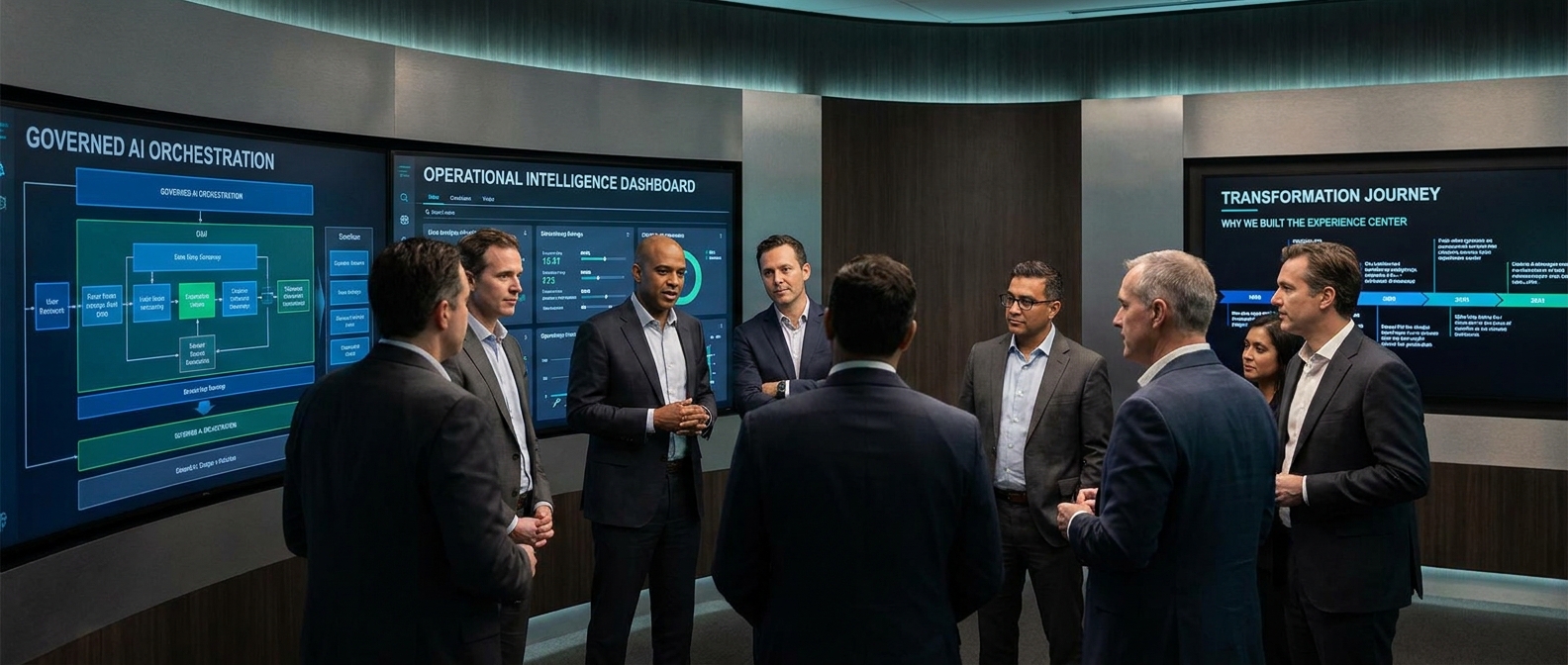
We discovered that the biggest challenge in enterprise AI transformation was not technology — it was helping people imagine themselves inside the future operating model.
Enterprise AI Became Impossible to Visualize
We discovered something unexpected.
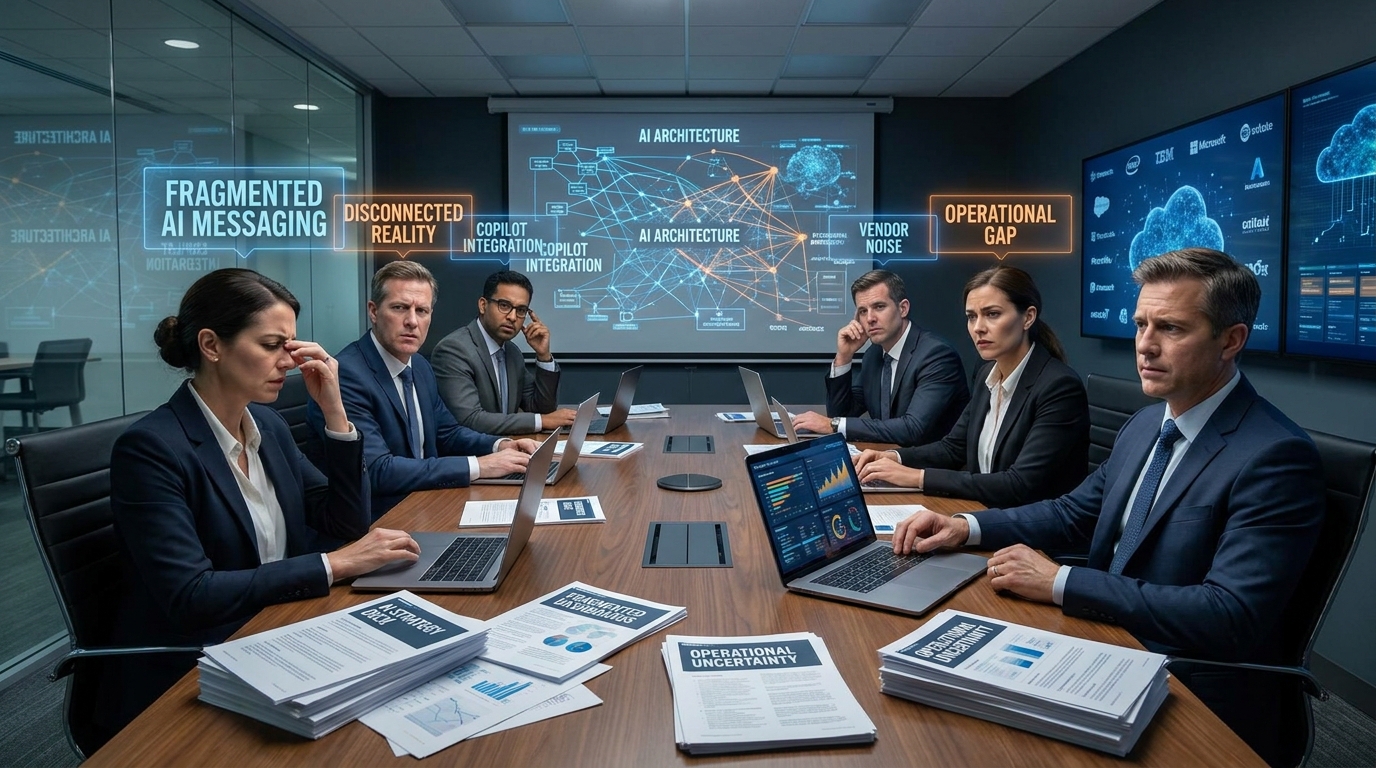
Even when the technology worked, the workflows were compelling, and the operational value was real — people still struggled. They struggled to visualize agentic workflows. They struggled to understand what operational transformation actually meant for their organization. They struggled to cut through the noise.
The core problem was not technology. It was imagination.
Executives could not see themselves inside the future operating model. Not because they lacked sophistication — but because the entire industry was giving them the wrong tools to understand transformation: slides, PDFs, architecture diagrams, and generic demos.
The Market Is Overwhelmed
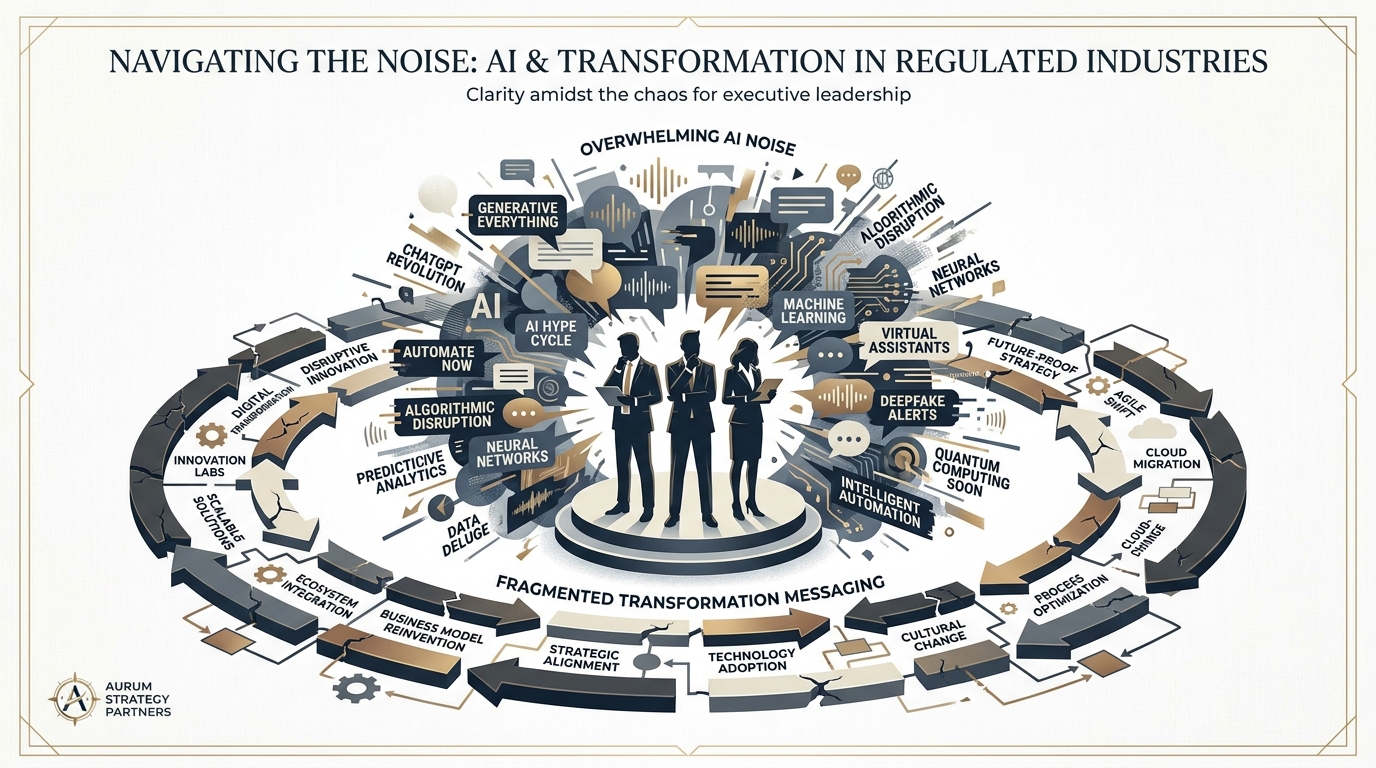
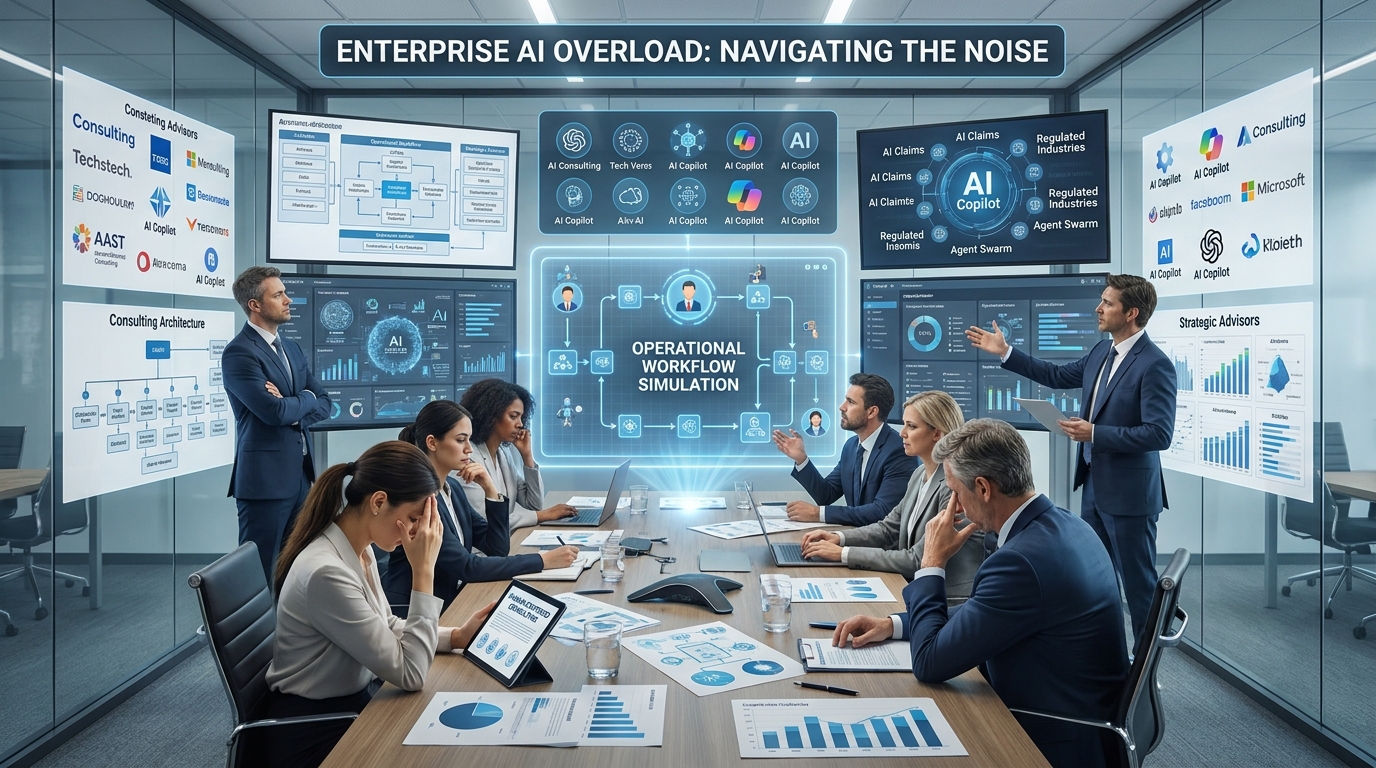
Everyone is showing copilots, agents, AI dashboards, architecture diagrams, and transformation decks. The volume is extraordinary. The differentiation is almost zero.
But almost nobody can help organizations experience operational transformation. Especially inside regulated operational workflows — where the stakes are highest, the complexity is greatest, and the gap between promise and reality is widest.
The market is exhausted. Executives are skeptical. Transformation has become difficult to explain — not because it is not real, but because the explanation tools are broken.
Are your clients struggling to separate operational reality from AI noise?
Explore an Operational Story →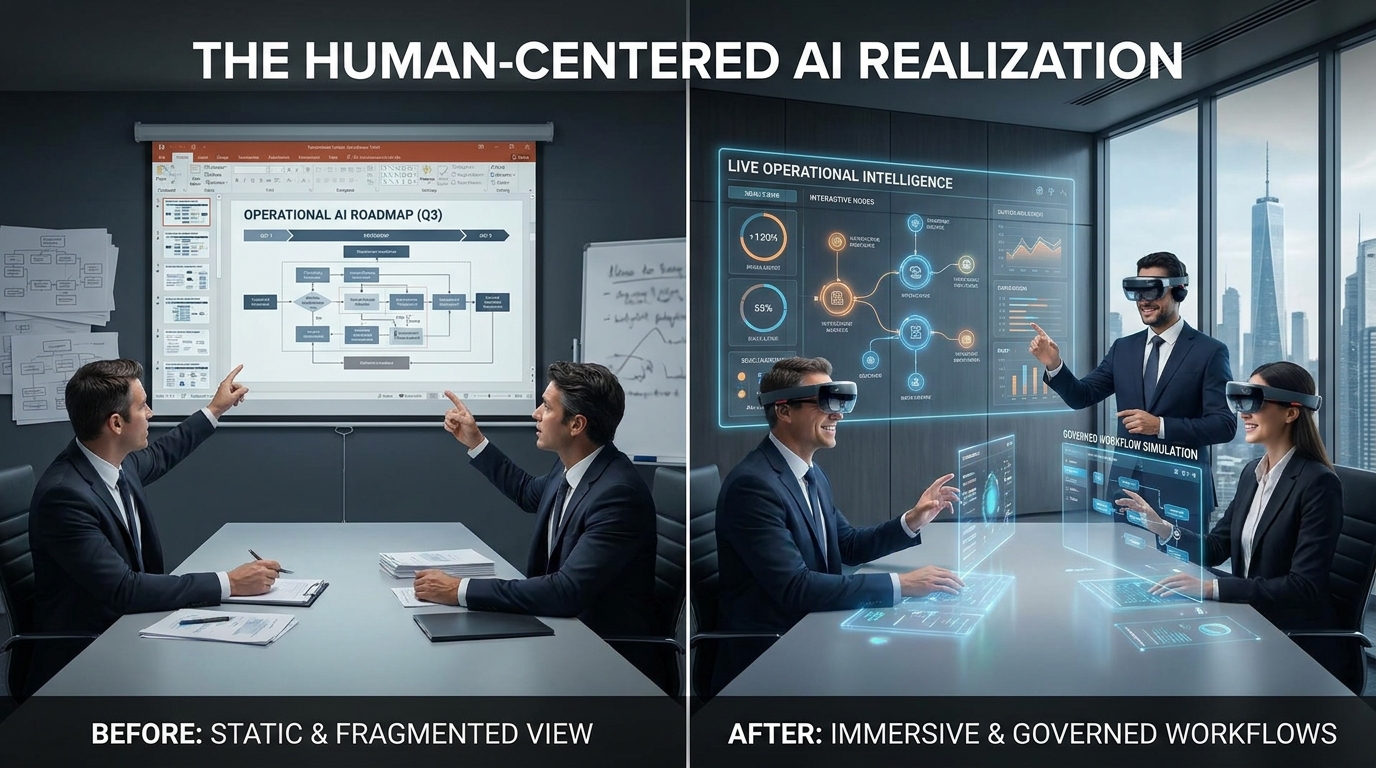
People Needed to Experience Transformation — Not Hear About It
The breakthrough realization was simple but profound:
Prospects cannot imagine themselves inside an agentic operational workflow.
Even sophisticated executives — people who have led transformation programs, managed operational complexity, and navigated regulatory landscapes — cannot visualize, operationalize, or emotionally connect to the future operating model through slides and decks.
So we stopped trying to "present AI."
Instead, we started building immersive operational transformation experiences.
If people cannot imagine themselves inside the workflow, transformation remains theoretical.
See a Workflow Transformation →
Something Changed When People Could See It
Initially, we simply wanted a better way to demonstrate workflows, a better way to educate, a better way to cut through noise.
We started building operational stories, workflow simulations, immersive studios, guided experiences, and transformation labs. We treated each one as an experiment.
Then something happened.
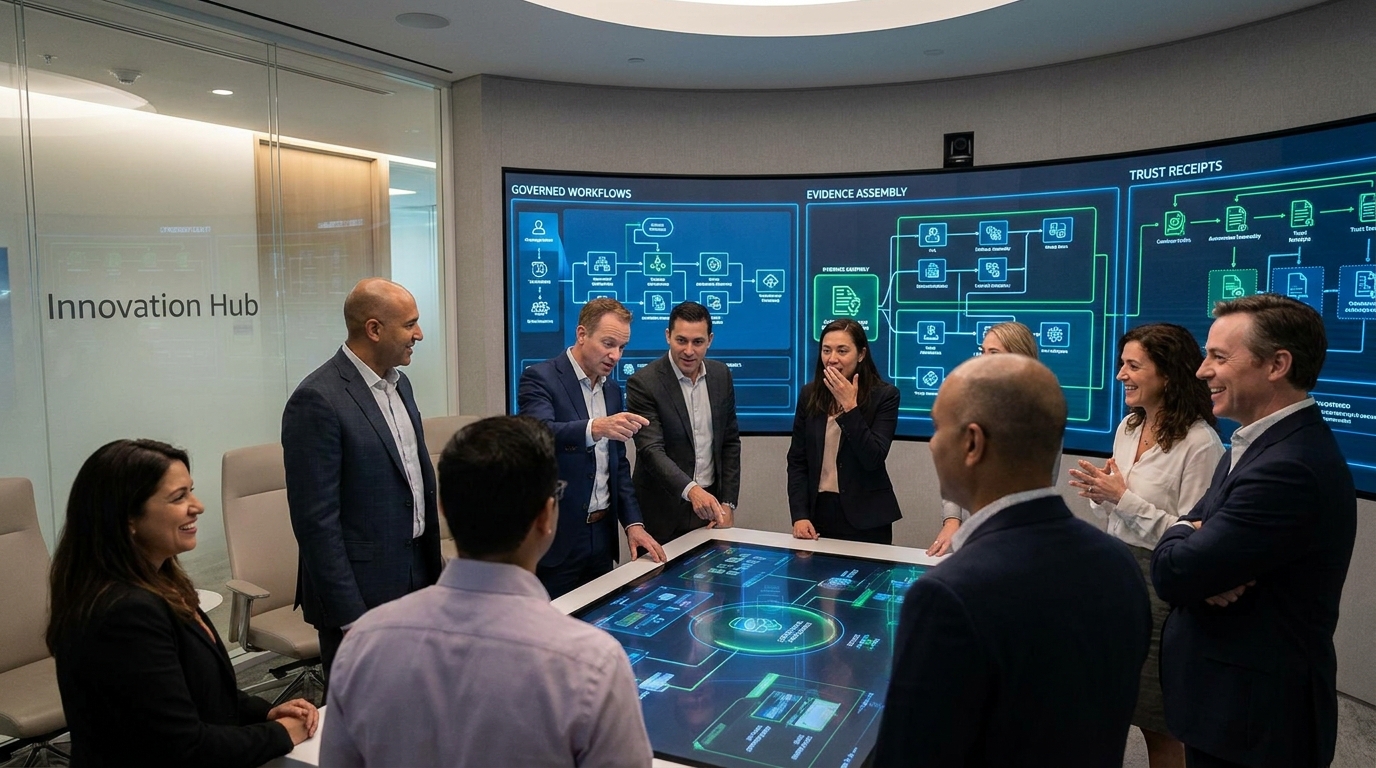
People reacted differently. They no longer said "Interesting platform." Instead they said:
"Wait… this is how operations could actually work."
That shift — from intellectual curiosity to operational recognition — changed everything. It meant we had crossed a threshold. People were no longer evaluating a technology. They were experiencing a future they could believe in.
We Had Accidentally Built Something Bigger
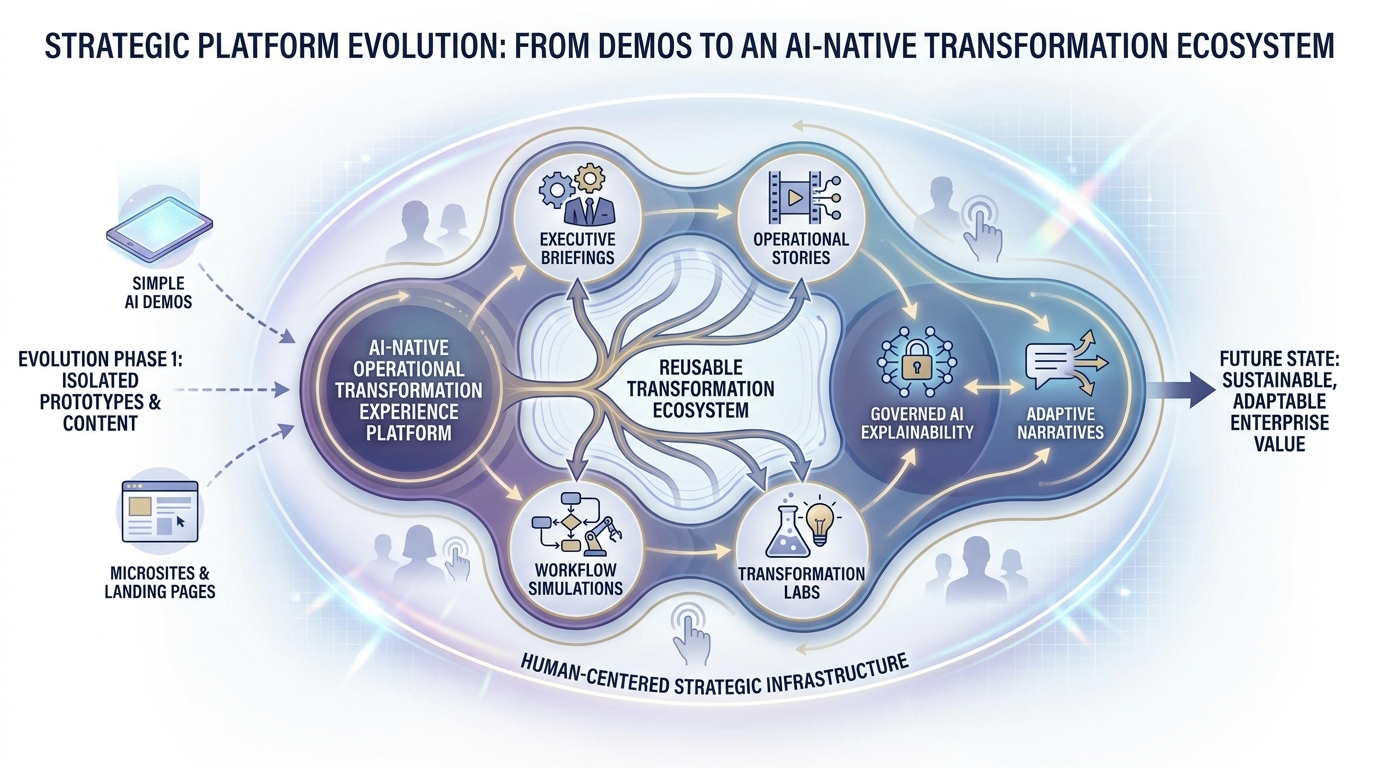
We realized we had not merely built demos, microsites, or workflow prototypes.
We had built an AI-native operational transformation experience platform — a system capable of:
- Immersive transformation storytelling
- Workflow simulation and operational labs
- Executive briefing experiences
- Adaptive operational narratives
- Governed AI explainability
- Strategic engagement orchestration
The tooling we built for our own transformation conversations had become a capability in its own right.
Want to see it in action? Contact us →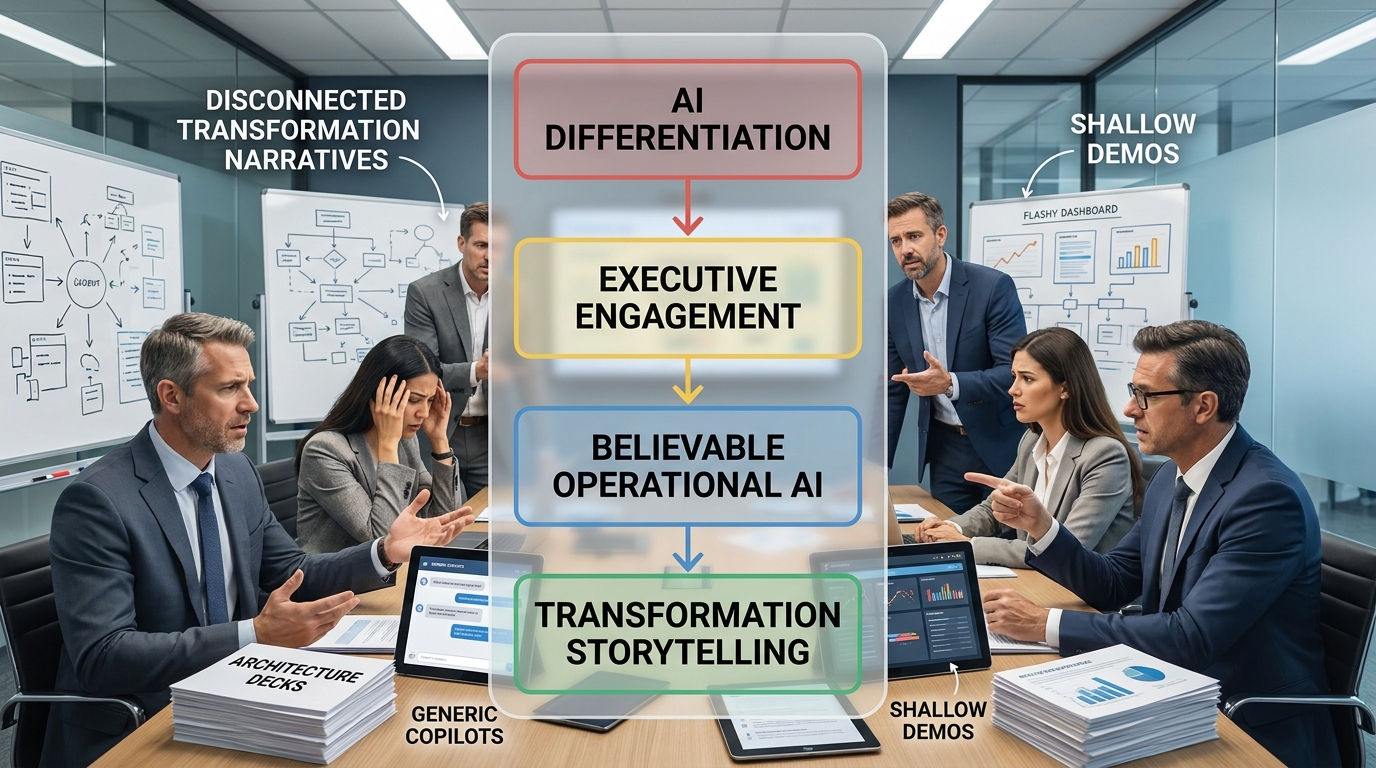
An Industry-Wide Problem
Consulting firms, PE operating groups, system integrators, and transformation organizations all struggle with the same challenges:
- AI differentiation — when everyone claims AI capability, nothing stands out
- Believable demos — generic prototypes do not convince operational leaders
- Operational AI storytelling — translating technical architecture into operational reality
- Executive AI briefings — engaging senior leaders beyond the first 10 minutes
- Regulated AI explainability — showing how governance works, not just asserting that it exists
- Transformation engagement — creating genuine buy-in, not compliance
Most AI conversations today are abstract, architecture-heavy, generic, difficult to personalize, and emotionally flat. The tools are inadequate for the task.
If AI conversations are becoming harder to differentiate, the engagement model itself may need to evolve.
Explore Transformation Experiences →The Hidden Complexity of Operational AI
Organizations today radically underestimate what it actually takes to operationalize AI safely and effectively inside regulated enterprise environments.
The market often treats copilots, prompts, workflow automation, and generic agents as though they are equivalent to enterprise operational AI. But real operational AI requires dramatically more sophistication:
- Governed orchestration and evidence lineage
- Contextual intelligence and operational memory
- Bounded autonomy and escalation handling
- Human supervision and resilient workflow execution
- Explainability, auditability, and semantic operational understanding
- Organizational transformation across functions and roles
Operational AI is easy to prototype — and extraordinarily difficult to operationalize responsibly. This complexity is largely invisible in traditional AI demonstrations, architecture diagrams, and generic copilots.
As a result, many organizations underestimate implementation effort, governance requirements, workflow transformation complexity, and organizational adoption challenges. This is one reason so many enterprise AI initiatives struggle to move beyond pilots.
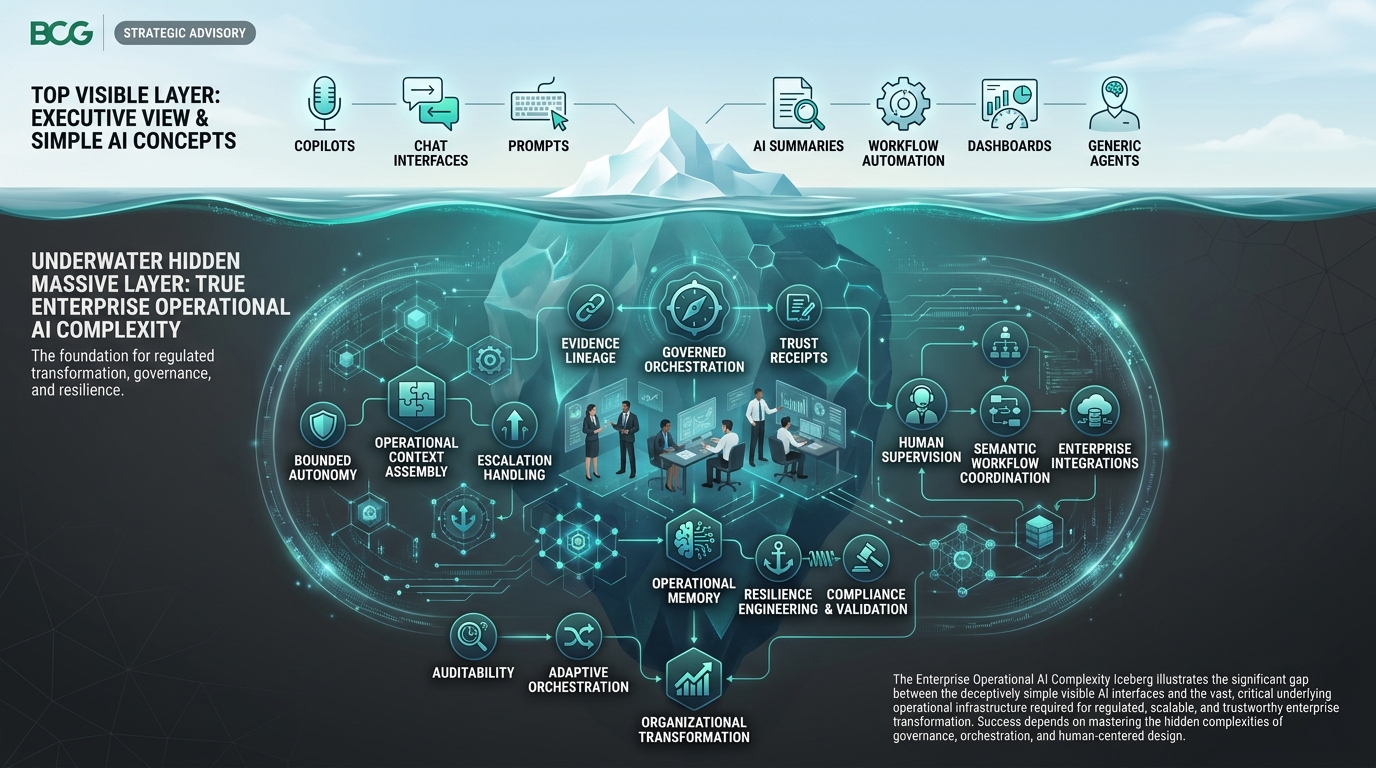
"Operational AI is easy to prototype and extraordinarily difficult to operationalize responsibly."
Operational AI is easy to prototype — and extraordinarily difficult to operationalize responsibly.
Explore Governed Operational Intelligence →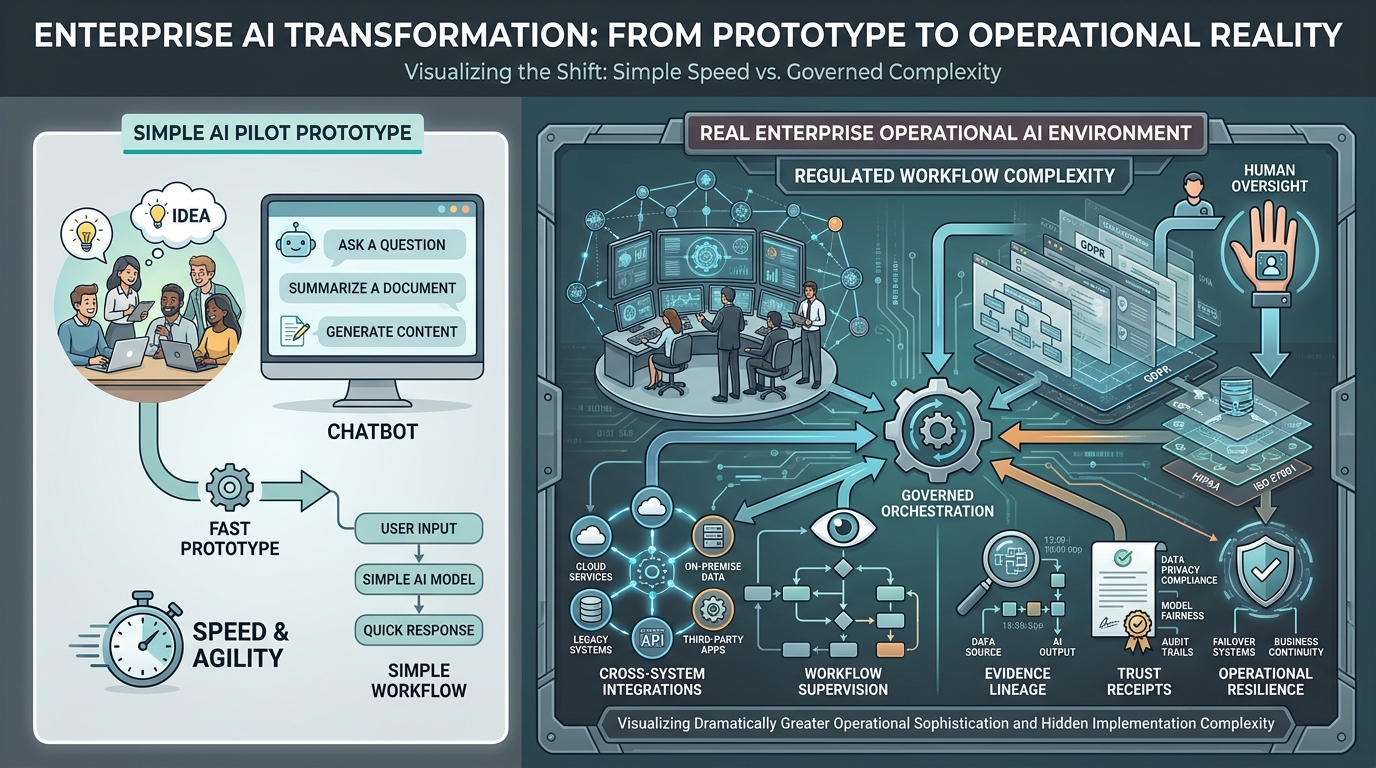
The Market Is Being Pushed Faster Than It Is Being Educated
At the same time, stakeholders are being pushed to make AI transformation decisions faster than they are being meaningfully educated about what operational AI actually requires.
Vendors aggressively promote copilots, AI agents, orchestration, automation, and transformation acceleration. But very few help organizations truly understand:
- Operational implications — what changes when AI enters regulated workflows
- Governance realities — what regulators actually expect
- Orchestration complexity — the gap between a demo and production-grade operations
- Workflow transformation demands — how roles, processes, and oversight must evolve
- The difference between prototypes and production — what breaks when you scale
The market is being pushed — but not properly educated. As a result, many organizations are forced to make strategic decisions under competitive pressure, executive urgency, and transformation mandates — with incomplete operational understanding.
This creates unrealistic expectations, fragile implementations, failed pilots, transformation fatigue, and growing skepticism.
We realized organizations did not simply need more AI vendors. They needed a safe way to understand, explore, experience, and contextualize operational transformation before making strategic commitments. That realization became foundational to the Experience Center.
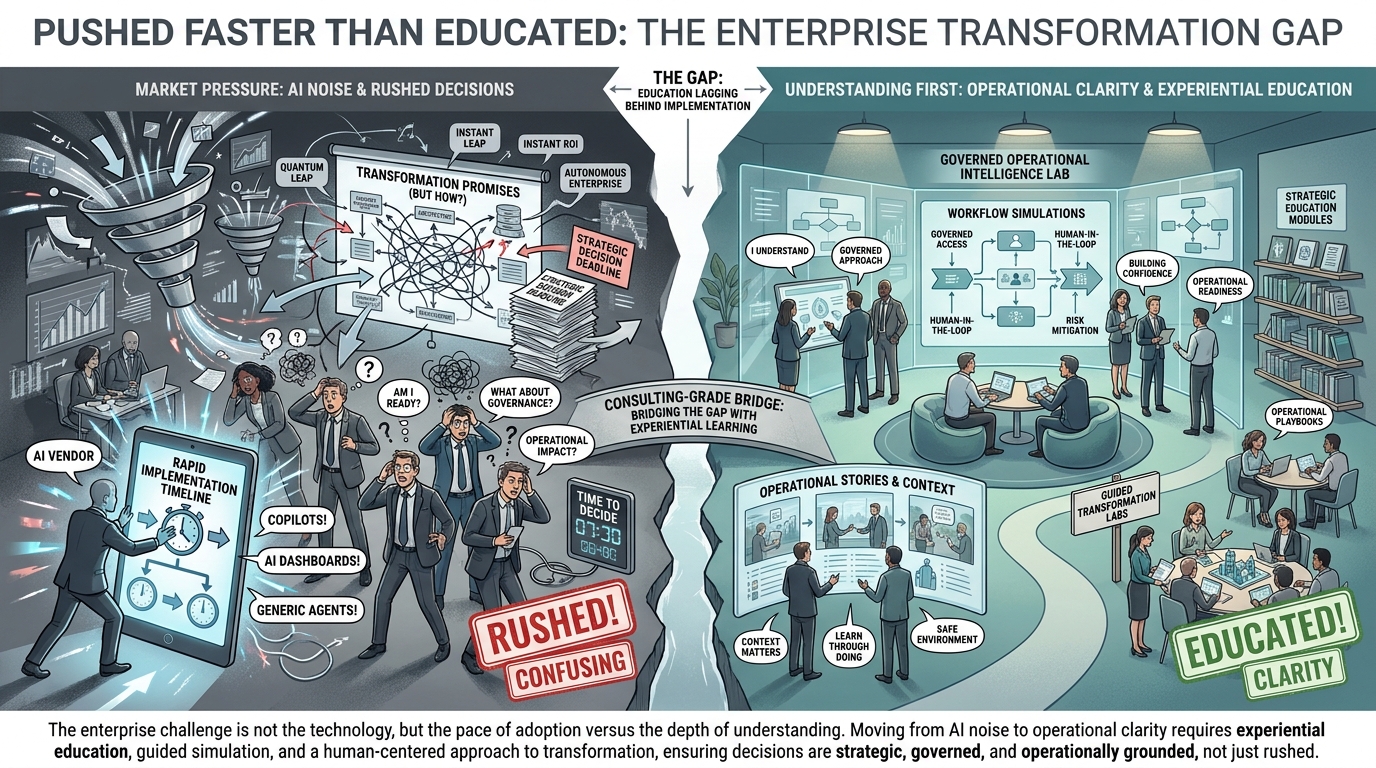
Transformation understanding must precede transformation commitment.
What if organizations had a safer way to explore operational AI transformation before making strategic commitments?
Explore a Guided Experience →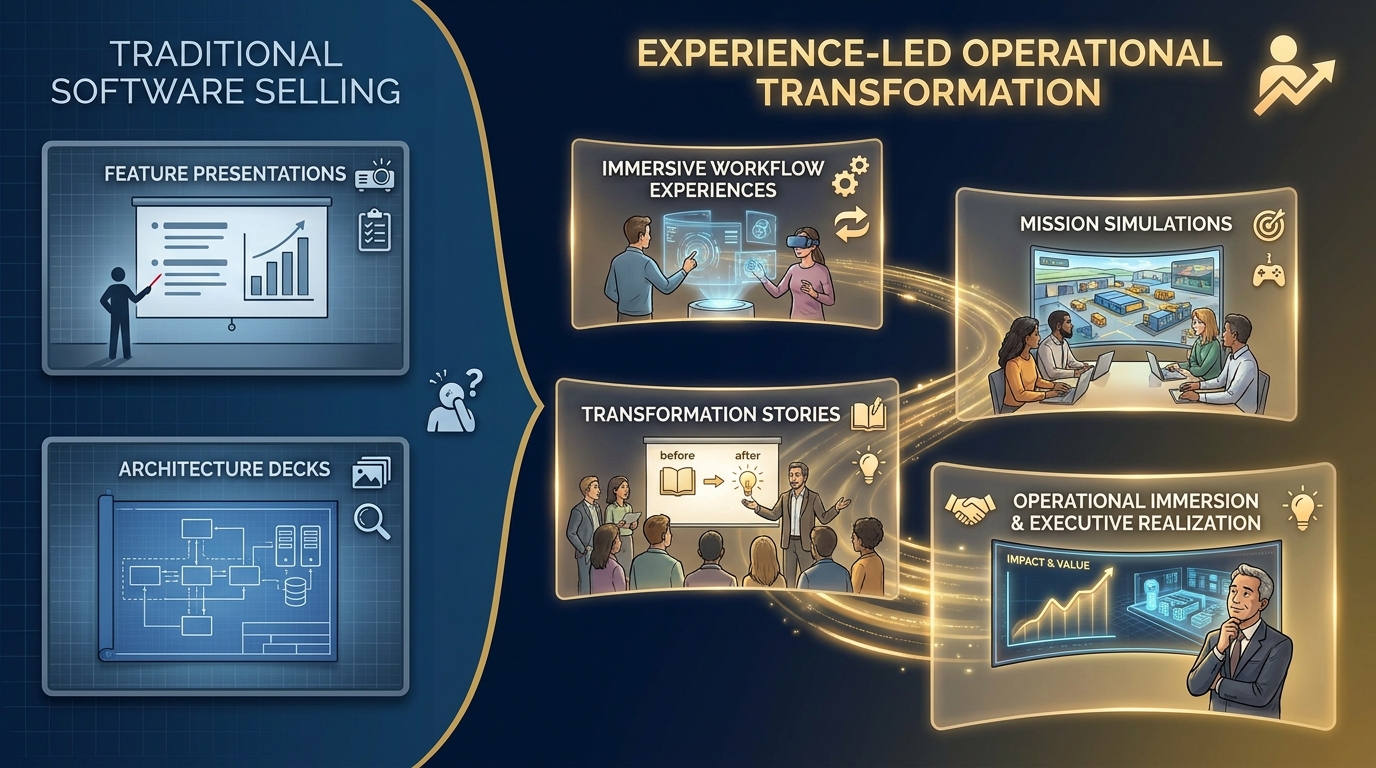
Experience-Led Operational Transformation
So we evolved toward a different model. Instead of selling software, showing features, or pushing architecture, we now focus on:
- Operational immersion — placing people inside governed workflows
- Transformation realization — the moment someone sees themselves in the future operating model
- Workflow-centric storytelling — narratives built around real operational pain, not technology features
- Strategic sensemaking — helping leaders connect AI capability to operational strategy
- Operational education — deep-dives into the concepts that make governed AI different
- Governed AI explainability — showing evidence chains, trust receipts, and bounded autonomy in action
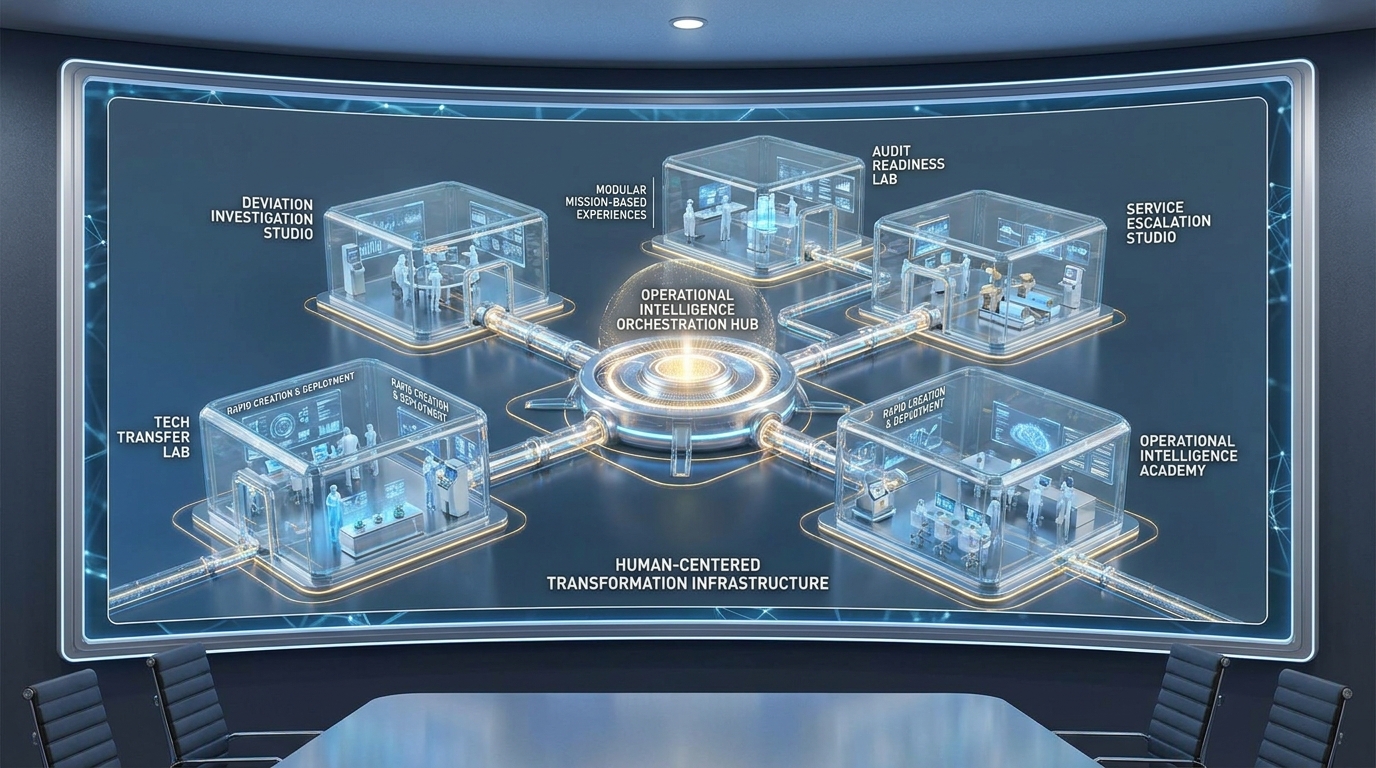
A Factory for Operational Transformation Experiences
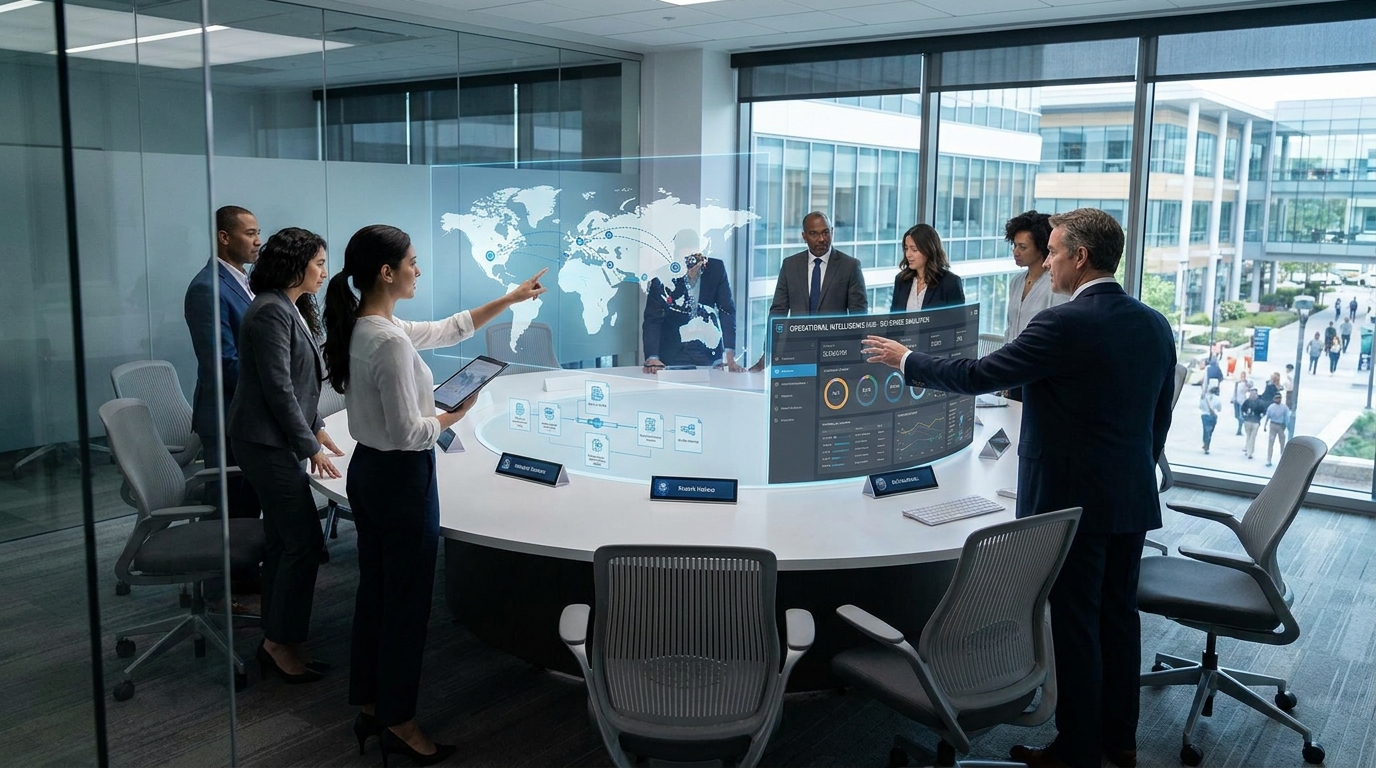
We developed a system for rapidly standing up immersive Studios and Labs — environments where organizations can experience future operating models, interact with governed workflows, test-drive operational transformation, and co-create transformation ideas.
Each one is purpose-built for a specific operational domain — not a generic template, but an immersive environment tuned to the workflows, language, and pain points of the people who will use it.
Why It Matters
The future of enterprise AI engagement will not be more decks, more copilots, or more architecture diagrams.
The future is immersive operational realization.
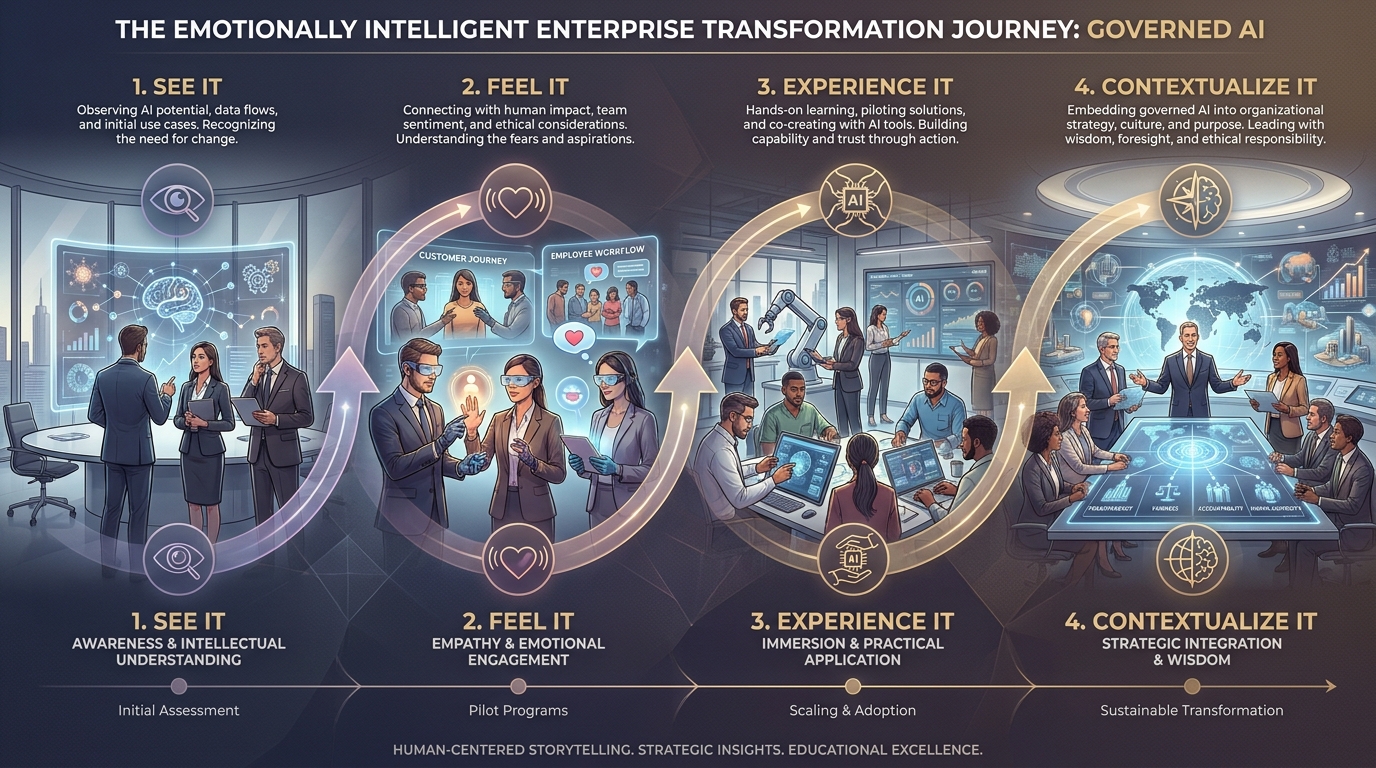
Because people must:
- See it — visualization, not abstraction
- Feel it — emotional connection to operational outcomes
- Experience it — interactive, not passive
- Contextualize it — mapped to their specific operational reality
before they believe transformation is real.
A New Transformation Engagement Model
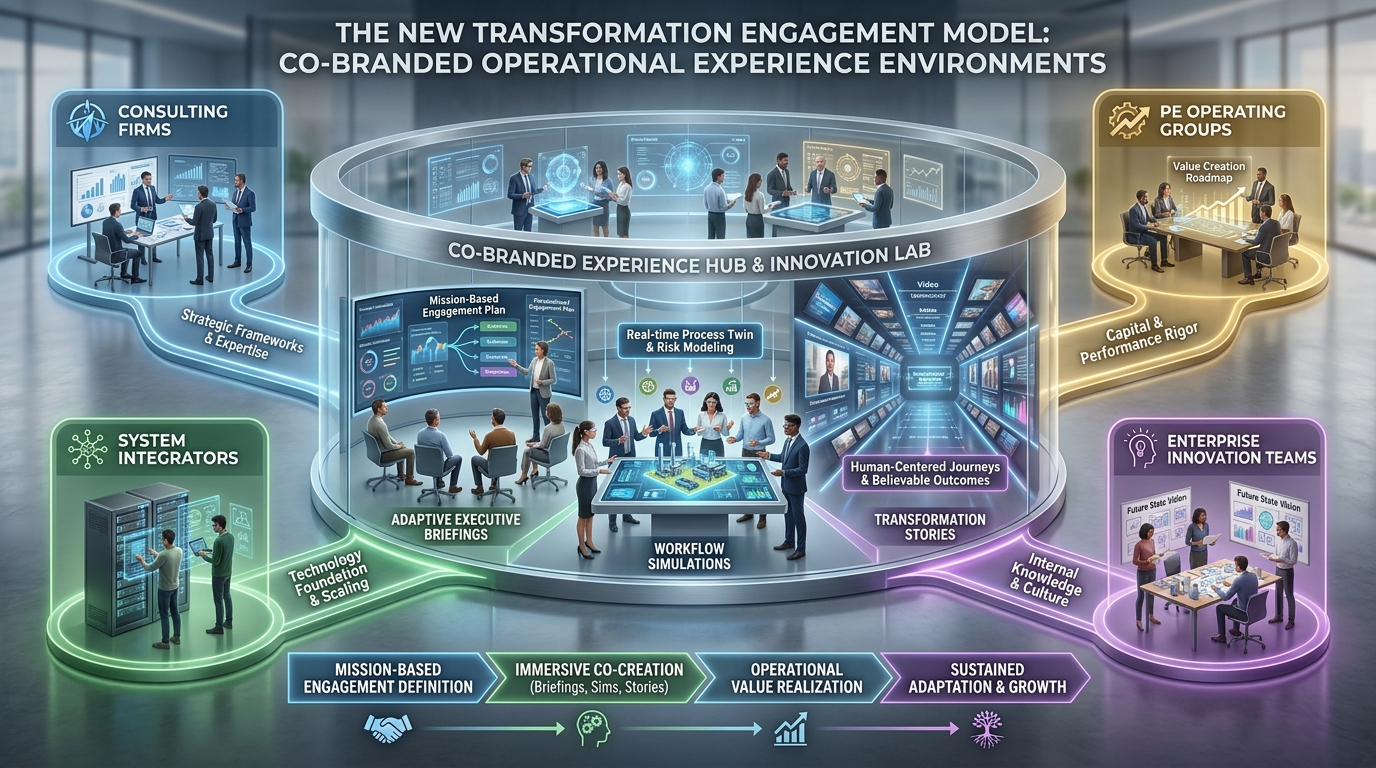
We increasingly realize that this capability itself may become transformation infrastructure — not merely marketing.
The Experience Center model is potentially:
- Co-branded with consulting partners
- White-labeled for transformation programs
- Partner-deployable across industries
- Reusable across transformation engagements
This is especially relevant for consulting firms, PE operating groups, system integrators, and transformation organizations who need better ways to engage clients around operational AI transformation.
If transformation engagement itself is changing, firms may need new infrastructure — not just new content — to meet their clients where they are.
Continue the Conversation →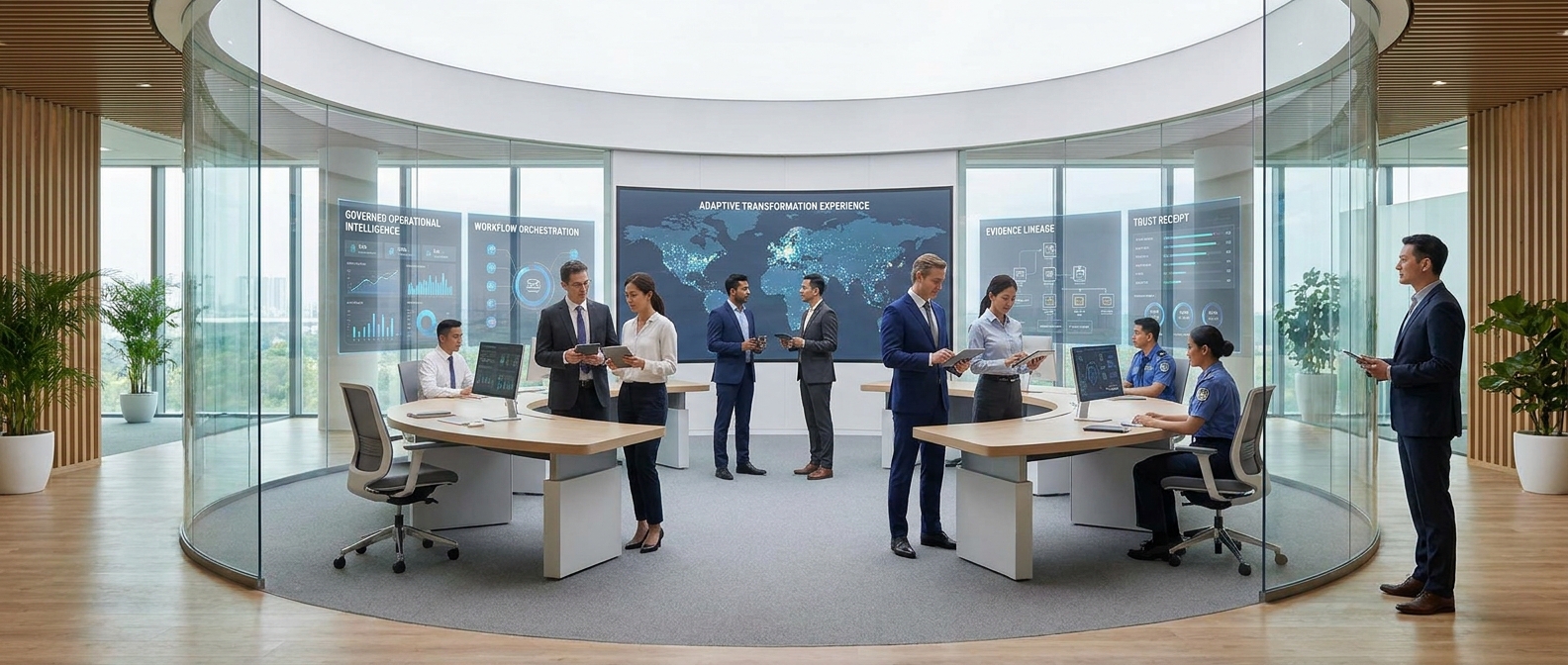
The Experience Center is not trying to convince people to buy software.
It is helping organizations experience believable operational transformation directly.
And in a world overwhelmed by AI noise, that changes everything.